Understand before automating.
Find the real workflow, the people who depend on it, and the constraints that shape a useful solution.
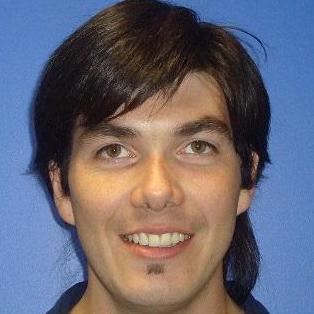
About / Osvaldo Demo
 Software + infrastructure
I'm Osvaldo Demo, a software and infrastructure engineer. I turn operational knowledge into systems people can use, understand, and depend on.
Across my career, one question keeps returning: how do we make a complicated system easier to understand, change, and depend on?
The problems that interest me often cross boundaries: a database session that outlives its task, a deployment that needs a safer recovery path, an API whose domain model no longer fits, or a performance question that needs a better experiment.
Simple IT Automation is where I work through those questions in writing. It connects hands-on engineering with the judgment and ownership needed to carry a system forward.
The story behind the work
A career shaped by the connection between software and its operating environment.
Enterprise Unix, systems administration, and virtualization gave me an operational foundation: understanding how systems behave when people rely on them.
Provisioning tools and automation led into backend services, data pipelines, and product workflows. The work grew to include security products, SaaS, telemetry, and analytics.
Platform engineering, cloud migrations, and performance investigation brought the pieces together: application behaviour, infrastructure, delivery, and the people responsible for all three.
What Simple IT Automation stands for
Find the real workflow, the people who depend on it, and the constraints that shape a useful solution.
Give retries, recovery, and rollback a deliberate place in the system, alongside the successful path.
Use experiments to separate what the evidence demonstrates from what still needs to be investigated.
Choose boundaries that make a system easier to reason about while keeping its important tradeoffs visible.
Consider deployment, operation, maintenance, and handoff as part of the engineering work.
Explain why a decision was made, what alternatives were considered, and what the experience taught you.
Why this journal exists
Field notes on what changed, why it changed, what failed, and what the work taught me. Written for engineers growing into broader ownership and teams making their systems more dependable.
Explore the field notesDomain models, APIs, data boundaries, and distributed work.
Automation, delivery, migrations, recovery, and operational ownership.
Workloads, measurements, constraints, and defensible experiments.
Technical judgment, communication, collaboration, and broader responsibility.
Domains & engineering areas
The kinds of systems and engineering questions I work with.
Domain modelling, integrations, onboarding, and reliable background workflows.
Access boundaries, verification flows, and service modernization.
Telemetry, time-sensitive data, tracking workflows, and geographic models.
Ingestion, reporting, privacy rules, and trustworthy transformations.
Provisioning, delivery, migrations, and repeatable operational tooling.
Workload modelling, measurements, database lifecycle, and recovery.
Keep the conversation going